Tabriz city

Tabriz city

Wednesday, May 10, 2017

El golu park

El Gölü (Azerbaijani: El Gölü ائل گؤلو, and Persian: ائل گلی), also known as Shah Gölü (Persianشاه گلی‎‎, AzerbaijaniŞah Gölü) is the name of a large park inTabrizIran. It has a square artificial lake surrounded by side walk in four sides. There is also a building in the middle of the lake, with traditional architecture ofIranian Azerbaijan. In South of the lake there is a hill covered by trees. Two beautiful stairways connecting the side walks to the top of the hill. At top of the hill there is a building with modern architecture (Hotel Pars building). There is also a funfair next to the park.
The early history of the El-Gölü is not clear. However, it seems that the lake originally was used as a water resource for agricultural purposes. In old times[when?] there was an artificial island with a small palace in the middle of the lake which was used as royal summer palace during the Qajar dynasty (when Tabriz was the official residence of the Prince of Iran). During 2nd Pahlavi's the palace was reconstructed and a pass-way was built to connect the island to the sidewalks around the lake, constructed in Karakoyunlu period 1485 AD.

Monday, May 8, 2017

Maqbaratoshoara tabriz

Maqbarat-o-shoara (Persianمقبرةالشعراء‎‎) or theMausoleum of Poets (مزارِ شاعران Mazār-e Shāerān orمزارِ سرایندگان Mazār-e Sorāyandegān) is a graveyard belongs to classical and contemporary poets, mystics and other notable people, located in the Surkhab district of Tabriz in Iran. It was built by Tahmaseb Dolatshahi in the mid-1970s while he was the Secretary of Arts and Cultures of East Azarbaijan.
On the east side of Sayyed Hamzeh's grave and Ghaem Magham's grave, there is a graveyard containing the graves of important poets, mystics, scientists and well-known people of Tabriz. The Mausoleum was first mentioned by the medieval historian Hamdollah Mostowfi in his Nozhat ol-Gholub. Hamdollah mentions it being located in what, at the time, was the Surkhab district of Tabriz.
Since the 1970s, there have been attempts to renovate the graveyard area. Some work has been carried out like the construction of a new symbolic building on this site.
The first poet buried in this complex is Asadi Tusi(999-1072).

Blue mosque tabriz

The Blue Mosque (AzerbaijaniGöy məscid;Persianمسجد کبود‎‎ - Masjed-e Kabūd) is a famous historic mosque in TabrizIran. The mosque and some other public buildings were constructed in 1465 upon the order of Jahan Shah, the ruler of Kara Koyunlu.[1]
The mosque was severely damaged in anearthquake in 1780,[2] leaving only the iwan(entrance hall).[3] Reconstruction began in 1973 by Reza Memaran Benam under the supervision of Iranian Ministry of Culture. However, it is still incomplete.

Tabriz grand bazar

The Bazaar of Tabriz (Persianبازار تبریز‎‎, also Romanized as Bāzār-e Tabriz) is a historical market situated in the city center of TabrizIran. It is one of the oldestbazaars in the Middle East and the largest covered bazaar in the world.[citation needed]and is one of Iran's UNESCO World Heritage Sites.[2]

Constitution house of tabriz

The Constitution House of Tabriz, also known as Khaneh Mashrouteh, is a historical edifice located next to the Great Bazaar of Tabriz, on Motahari Ave in TabrizIran. During the years which led to Constitutional Revolution and afterwards the house was used as a gathering place of the leaders, activists and sympathizers of the movement. Among them, the most famous people were Sattar khanBagher KhanSeqat-ol-Eslam Tabrizi and Haji Mirza Aqa Farshi and the founder Haji Mehdi Kuzeh kanaani, himself a revolutionary activist and a well-reputed person of the time; who was named Abolmele, i.e. the father of the nation at the time. . The two-story building was constructed in 1868 by Haj Vali Me'mar-e Tabrizi[1]. It has numerous rooms and halls. The most beautiful part of the house is a skylight and corridor decorated with colorful glass and mirrors.

The house was constructed by order of Haj Mehdi Koozekonani in 1868. It includes a two floor building with internal and external areas featuring Qajar period architecture. Haj Mehdi Koozekonani was a merchant in the Bazaar of Tabriz. with initiating of Constitution revolution and rising up in Tabriz city, Haj Mehdi joined the revolution and became one of the major financier of the revolution. in the same time he used the house as a place for meeting of the revolution heads, and a place for publication of underground paper of the constitution movement. The house became important in the history once again just after world war II when it is used a place for Azerbaijan's Democrat Party meeting center (1946-1947). On 1975 the house is registered by Cultural Heritage of Iran.[1]

The first floor is an exhibition of sculptures of famous Iranian constitution revolutionaries and some of their personal belongings including their weapons, underground published newspaper of the revolution, night letters, the printing machine which was used in the house to publish revolution papers, and numerous photos from the revolution. One of the rooms in the building is belongs to the woman's role in the revolution.

Azerbaijan Museum

is the major archaeological and historical museum in Tabriz, in the northwest part of Iran(East Azerbaijan province). It was established on April 1958.[1] The museum consists of three major halls, a side yard, office rooms and a library. It mostly contains objects discovered from excavations in Iranian Azerbaijan, also some artworks and sculptures of artists. Its library contains more than 2500 books, both handwritten and printed, about history, archaeology, art and Iranian culture.[2] Apart fromNational Museum of Iran in Tehran, Azerbaijan Museum has the largest collection belonging to different periods of Iran's history.
The museum has three galleries. The first gallery bears the oldest remains from 5th millennium BC until Sassanian dynasty (212-656 AD). The museum's monuments include goddesses, Rhytons, two skeletons (male and female) and a carved slab of marble known asBism Allah-Stone.
The second gallery consists of two parts: one for Islamic archeology and another part for coins and seals. Part one involves pottery dated from the 10th to the 19th centuries. The coins of this gallery (part two), began with the Achamenid dynasty and end in the Qajar dynasty. The displayed seals and stamps date from the third millennium BC to Islamic eras.
The third gallery includes some sculptures made by Ahad Hosseini. They are made of plaster and represent the sculptor's own image about the fate of mankind in the 20th century.
In the yard of museum some stone figurines, statues, rams and inscriptions are kept.

Meshginshahr suspension bridge

Meshginshahr suspension bridge crosses the Khiav River, near MeshginshahrArdabil Province in the northwest Iran. It is theMiddle East's largest suspension bridge with a height of 80 metres (260 ft) and length of 365 metres (1,198 ft). The original bridge was built in 2015. It was designed and installed by Eng. Mahmoud Ganjalibeyk and Eng. Ali Ganjali-beyk.

Sunday, May 7, 2017

Orumiye lake

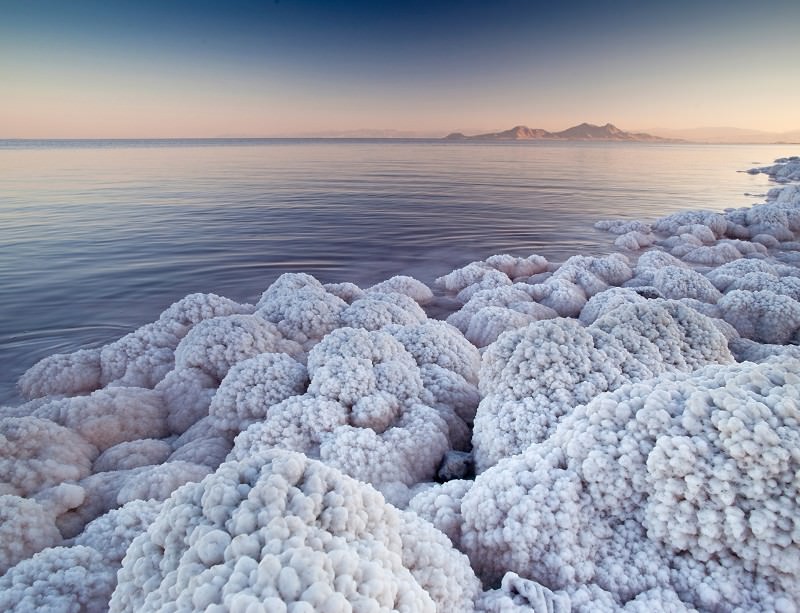
Lake Urmia (Persianدریاچه ارومیه‎‎,Daryāche-ye OrūmiyeAzerbaijaniاورمیا ﮔﺆﻟﻮUrmiya gölü) is an endorheic salt lakein Iran.[3][4] The lake is between the provinces of East Azerbaijan and West Azerbaijan in Iran, and west of the southern portion of the Caspian Sea. At its greatest extent, it was the largest lake in the Middle East and the sixth-largestsaltwater lake on Earth, with a surface area of approximately 5,200 km2 (2,000 sq mi), a length of 140 km (87 mi), a width of 55 km (34 mi), and a maximum depth of 16 m (52 ft).[5] The lake has shrunk to 10% of its former size due to damming of the rivers that flow into it, and the pumping ofgroundwater from the surrounding area.[6]
Lake Urmia, along with its once approximately 102 islands, is protected as a national park by the Iranian Department of Environment.

Shahar yeri

shahar yeri is a Neolithic and Bronze Age megalithic monument located near Meshkin shahr in the Iran
shahar yeri, in a 400-hectare area, is located near Pirazman village of Meshkin Shahr, in Ardabil province, in which some layers belonging to (8000 years ago) have been identified so far.
This area includes 280 Sngafrasht ancient antiquity AD is estimated to be more than 8 thousand years ago during the late Bronze Age and the Neolithic period dating back these areas and Chalcolithic and Early Iron is concerned. This Sngafrashtha with different heights from 70 to 360 cm, most of which are engraved in human forms. Azerbaijan has been found.

Babak castle

Pāpak Fort (Persianدژ بابک‎‎) or Babak Castle[1](Persianقلعه بابک‎‎), also known as the Immortal Castle or Republic Castle, is a large citadel and National Symbol of Iranians on the top of a mountain in theArasbaran forests, which is located 6 km southwest ofKalibar City in northwestern Iran. It has been identified as the stronghold of Pāpak Khorramdin, the leader of the Khurramites in Azarbaijan who fought the Islamic caliphate of Abbassids.[1] Iranian Azarbaijanis gather at Babak Castle during the first weekend in July for the annual commemoration of Babak Khorramdin.[2]
The ascent to the Castle is not for the infirm, elderly, or those afraid of heights. A series of long, and in places, broken steps lead the traveler to the top of a hill from where there are several choices for further ascent. The easiest is straight in front of the steps and consists of a long dirt track. As there are no sign posts towards the Castle, walk towards the peak on your left hand side but do not leave the dirt track. You will need hiking boots, a sun hat, plenty of water, and at least 3 hours for the climb, and 2 hours for the descent. At the end of the dirt track, turn left onto the rocky mountain side, and beware of slipping. The first of sign of the ruins will appear on your left, but do not become too complacent: the actual Castle is another 2 peaks march away. The first peak offers spectacular views of the Castl. After ascending a second peak, with its own ruins, you will see the Castle perched on top a jagged cliff. Ascending the Castle steps is a dangerous process, as there are sheer cliffs on your right hand side, and no protective rails or fences to prevent a fall of several hundred meters. Take extreme care of the edge, and hold on to your children. Once you have climbed the pinnacle of the cliff, you will truly appreciated the amazing effort in building and maintaining a fort at this altitude. Unfortunately, you will also have to tolerate the graffiti on the ancient walls, and young people playing chicken on top of the Castle walls. Under no circumstances should you even consider climbing these walls: first, this can damage the ancient structure, and second, a fall of several thousands of meters would lead to certain death. Nevertheless, the experience afterward is well worth the strenuous climb: the surrounding Arasbaran oak forest, jagged cliffs, mountains in the distance, and the history of the place combine to create one of Iran's most beautiful vistas. The castle, built on 2300-2600 meter heights, surrounded by gorges as deep as 400 to 600 meters, is believed to belong to the Parthian dynasty and modified under the Sasanid dynasty. To reach the castle, one has to trek a tortuous and narrow passageway and then cross a corridor-shaped temple, 200 meters in lengths.